
Blog
TBMQ 2.4: Sparkplug, Lifecycle Events and More

TBMQ 2.4 release: Sparkplug 3.0 aware MQTT server, client lifecycle events, a rebuilt metrics surface, and Professional Edition dropped message analytics.
Read more about TBMQ 2.4: Sparkplug, Lifecycle Events and More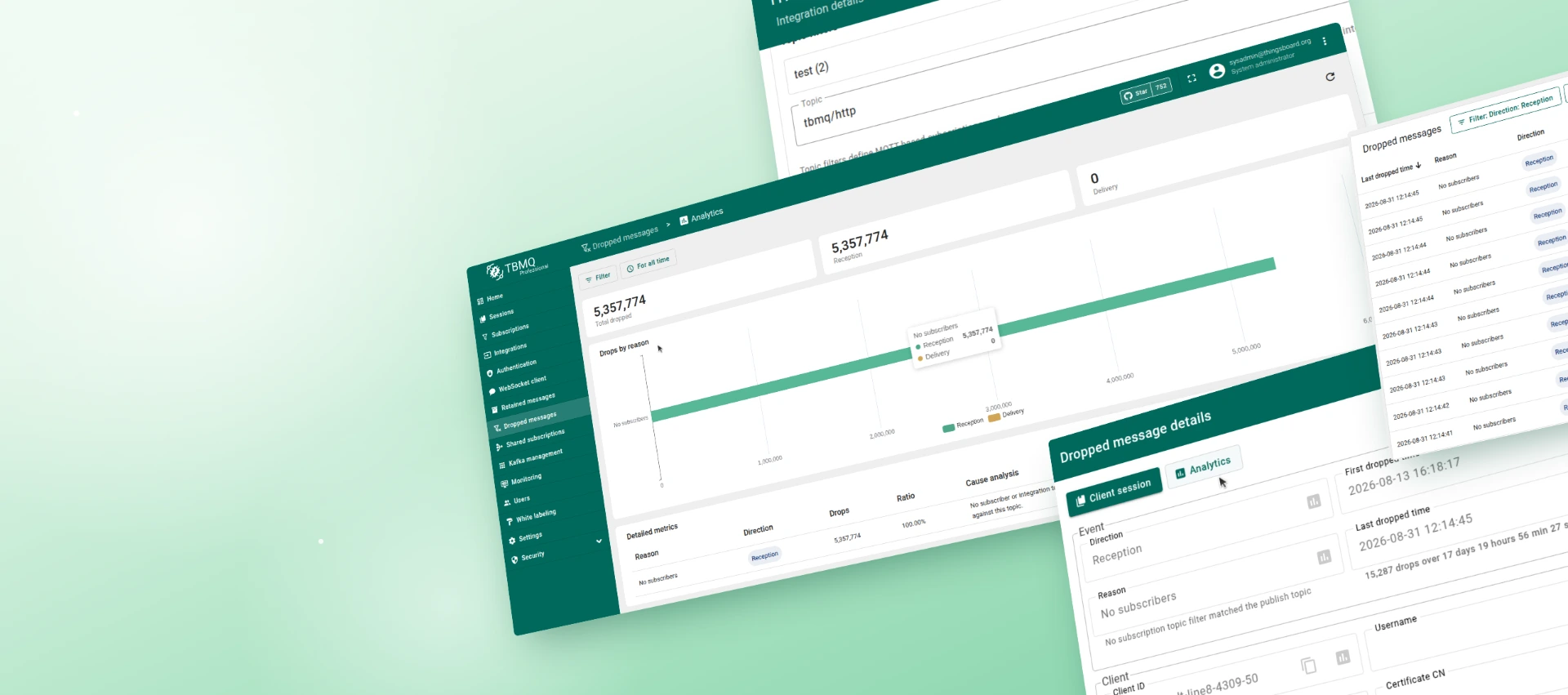
TBMQ 2.3: External Auth and Audit Trails
TBMQ 2.3 release: HTTP external authentication, bulk MQTT client provisioning, and Professional Edition audit logs, SSO role mapping, and Redis ACL support.
Read more about TBMQ 2.3: External Auth and Audit Trails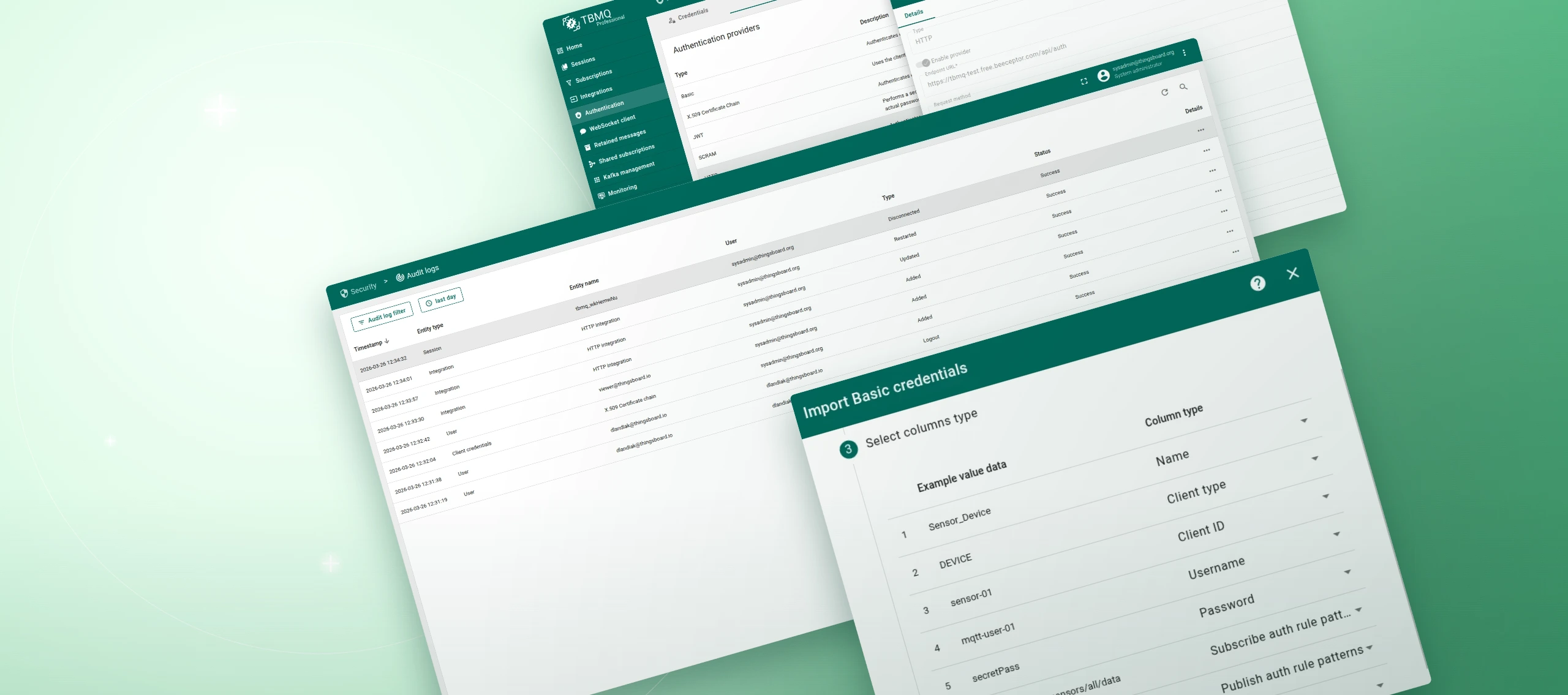
Introducing TBMQ Professional Edition
TBMQ Professional Edition launches with enterprise-grade security, observability, integration, and support — built on the TBMQ open-source core.
Read more about Introducing TBMQ Professional Edition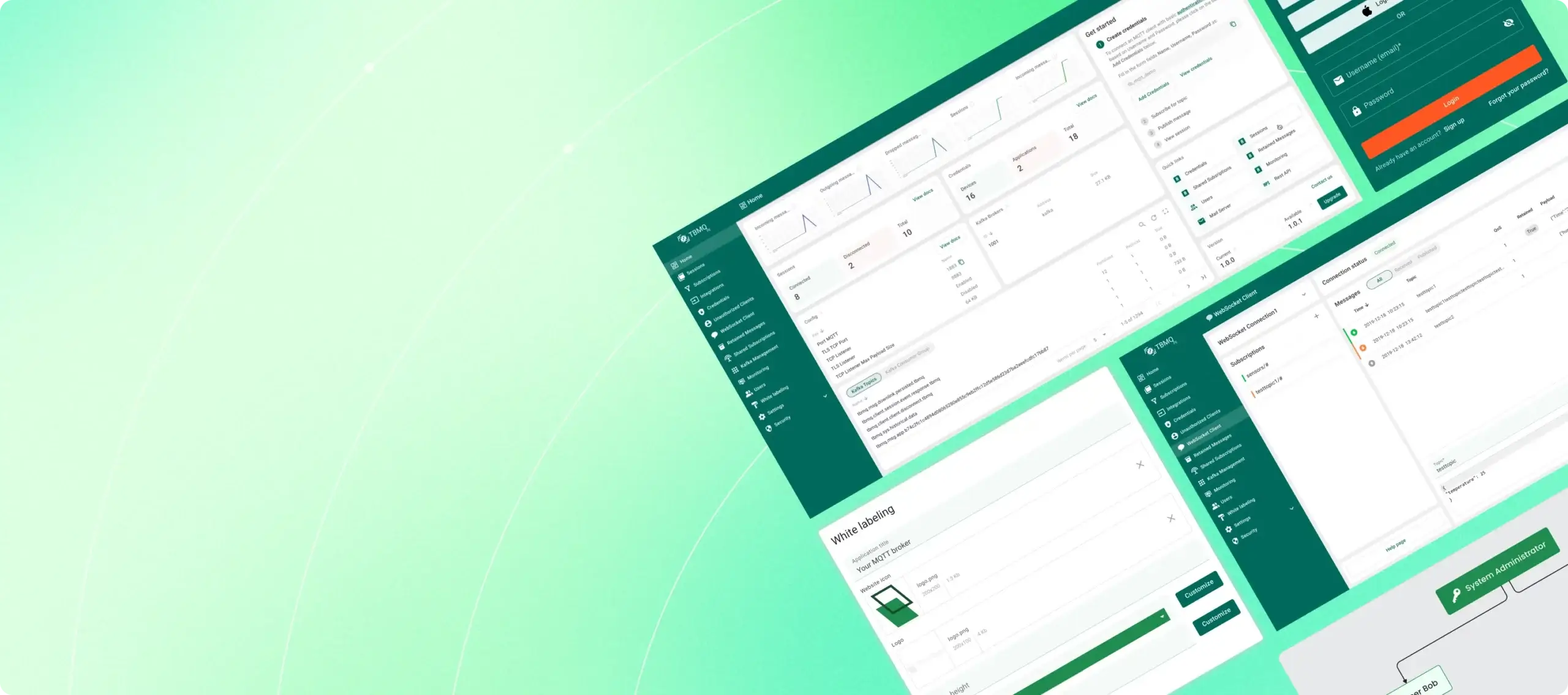
TBMQ 2.2: JWT Auth and Client Blocking
TBMQ 2.2 release: pluggable JWT authentication, client blocking, and other security improvements for production MQTT deployments at scale.
Read more about TBMQ 2.2: JWT Auth and Client Blocking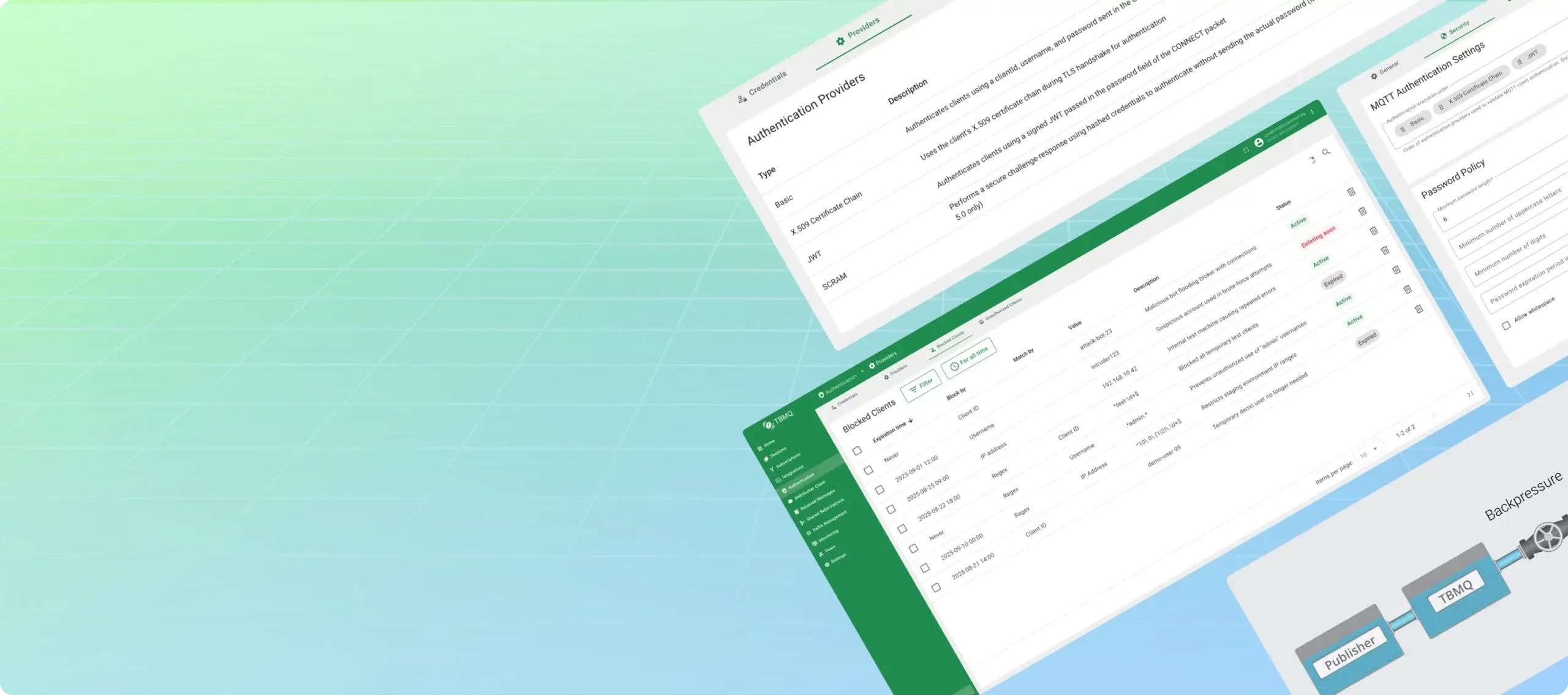
TBMQ 2.1: Embedded Integrations for MQTT Data
TBMQ 2.1 release: Integration Executor microservice with HTTP, Kafka, and MQTT outbound integrations, plus the official Helm Chart for K8s deployments.
Read more about TBMQ 2.1: Embedded Integrations for MQTT Data
TBMQ 2.4: Sparkplug, Lifecycle Events and More
TBMQ 2.4 release: Sparkplug 3.0 aware MQTT server, client lifecycle events, a rebuilt metrics surface, and Professional Edition dropped message analytics.
TBMQ 2.3: External Auth and Audit Trails
TBMQ 2.3 release: HTTP external authentication, bulk MQTT client provisioning, and Professional Edition audit logs, SSO role mapping, and Redis ACL support.
Introducing TBMQ Professional Edition
TBMQ Professional Edition launches with enterprise-grade security, observability, integration, and support — built on the TBMQ open-source core.
TBMQ 2.2: JWT Auth and Client Blocking
TBMQ 2.2 release: pluggable JWT authentication, client blocking, and other security improvements for production MQTT deployments at scale.
TBMQ 2.1: Embedded Integrations for MQTT Data
TBMQ 2.1 release: Integration Executor microservice with HTTP, Kafka, and MQTT outbound integrations, plus the official Helm Chart for K8s deployments.
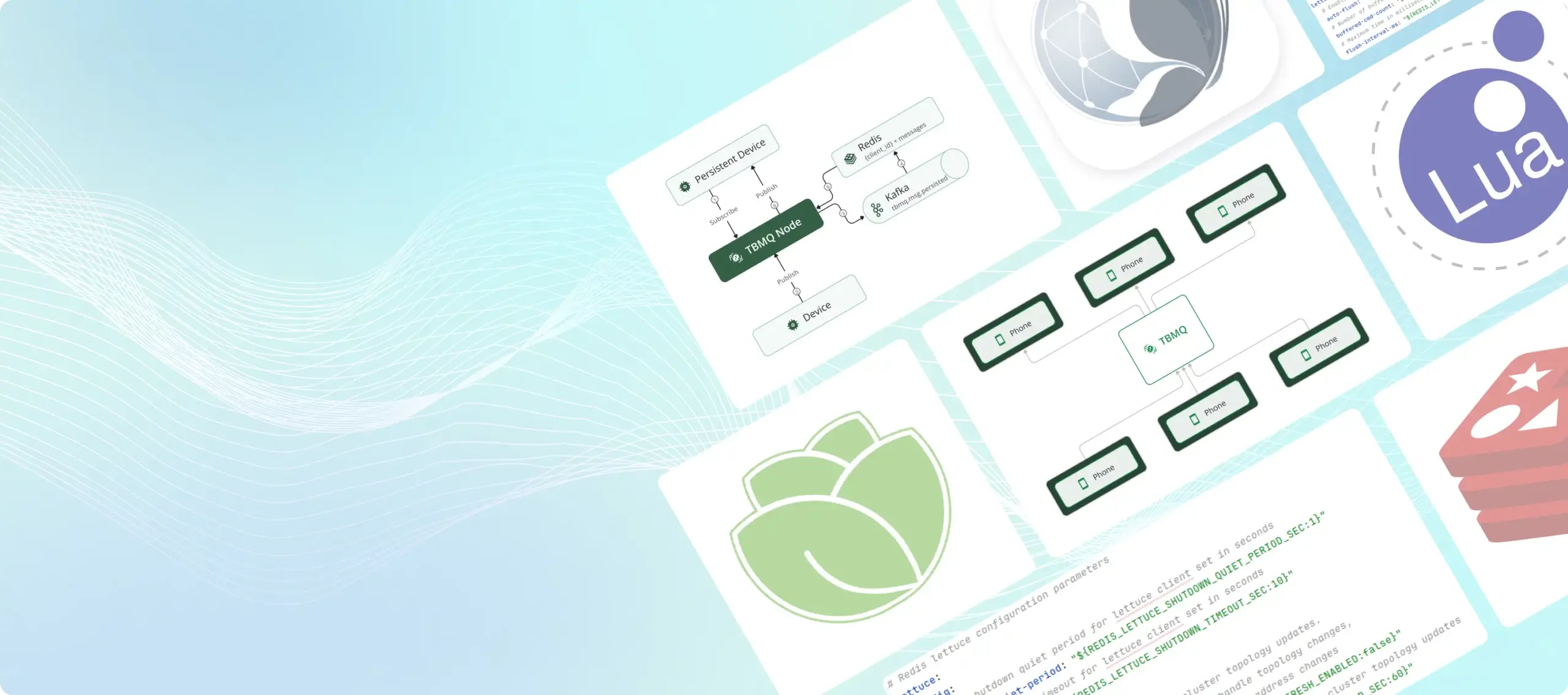
1 Million Reasons to Choose TBMQ
TBMQ 2.x handles 1 million MQTT messages per second for persistent sessions with no single point of failure — architecture and performance walkthrough.
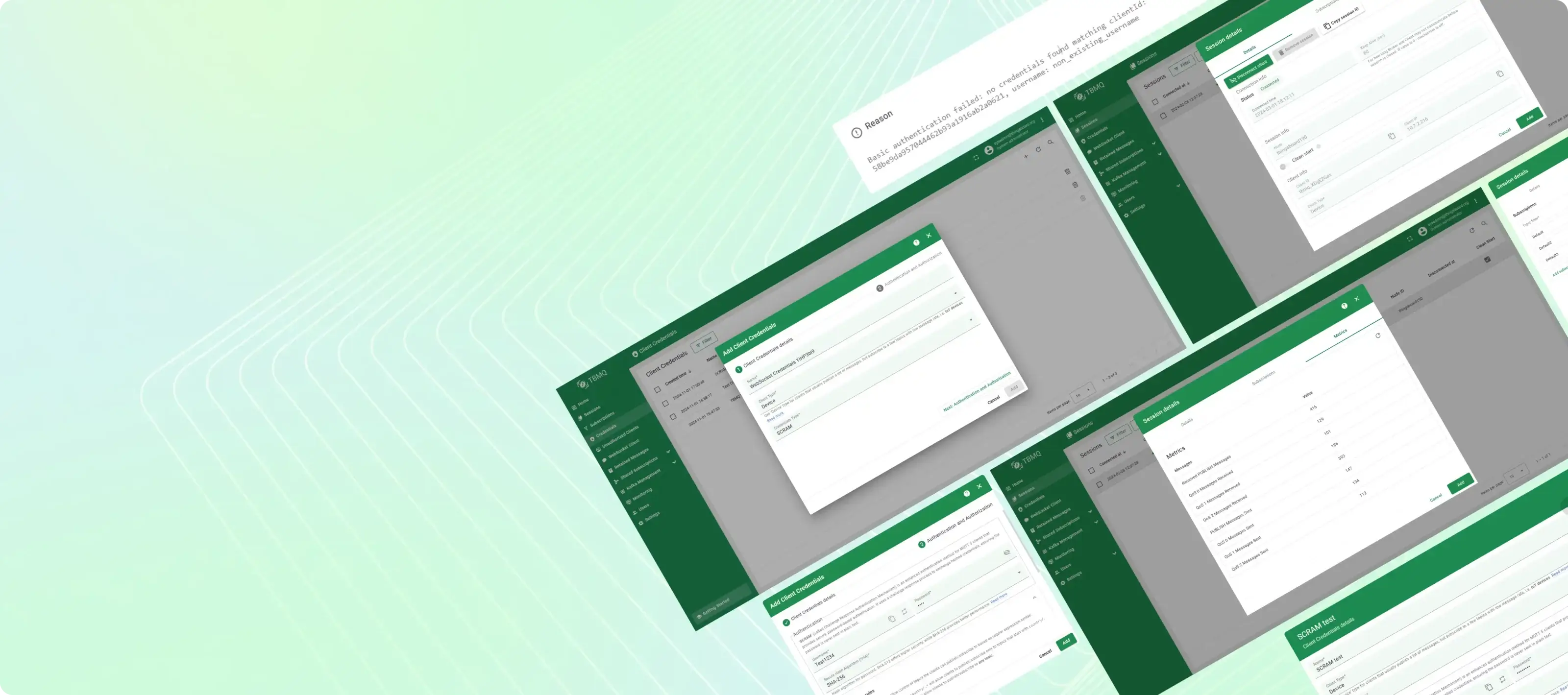
TBMQ 2.0: Redis Migration and MQTT 5.0 Support
TBMQ 2.0 release: persistent device sessions migrated from PostgreSQL to Redis, full MQTT 5.0 support, and other architecture improvements.
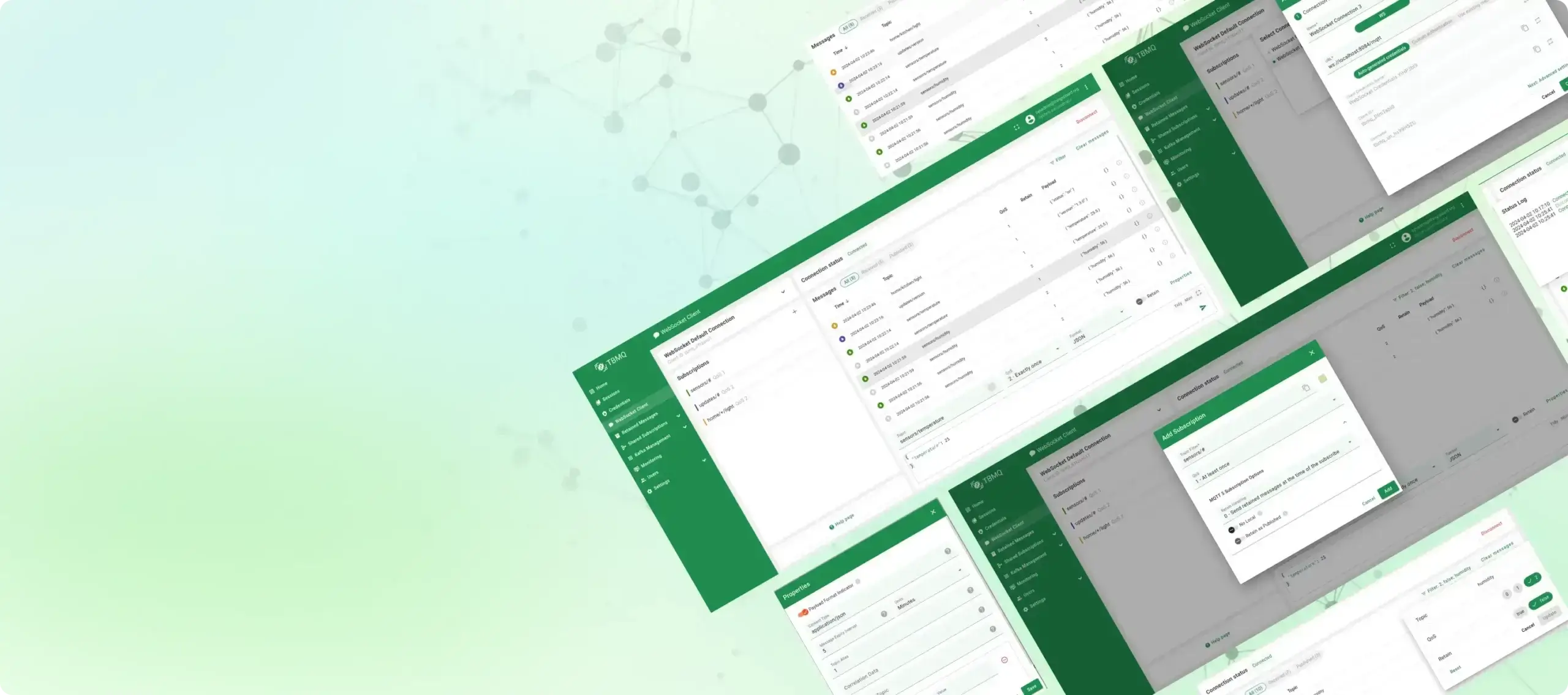
TBMQ 1.3.0: WebSocket Client, MQTT 5 Features
Thingsboard releases TBMQ 1.3.0.This update improves MQTT over WebSocket functionality by introducing a new WebSocket client.